Taybeh Beer: Brewing Against the Odds
What a Palestinian microbrewery can teach us about resilience, identity, and soft power.

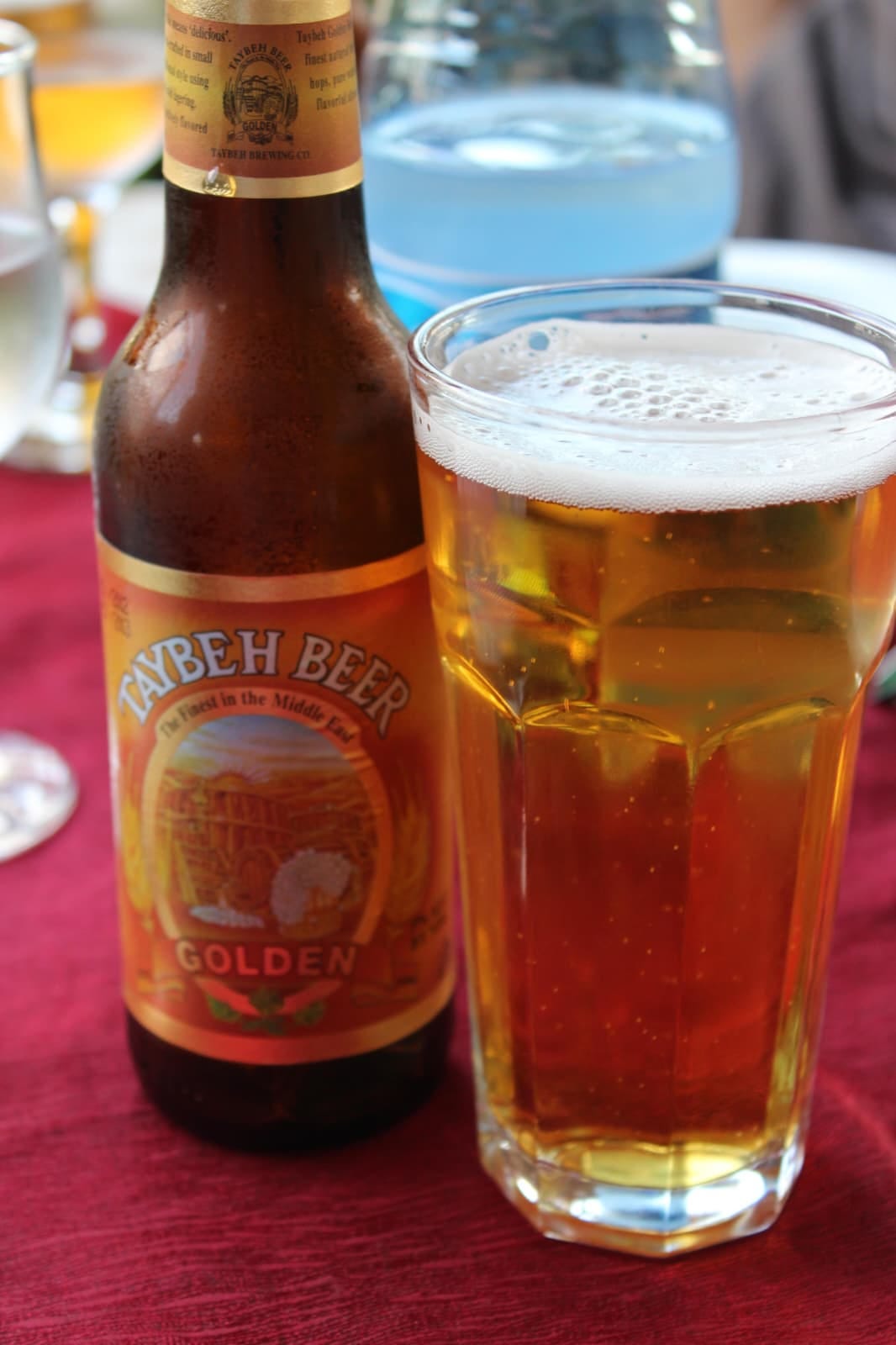
When you think of the Palestinian Territories, beer probably isn’t the first thing that comes to mind. Yet in the small West Bank town of Taybeh, just outside Ramallah, a Palestinian family has built one of the region’s most unlikely success stories: a microbrewery that now ships craft beer to 17 countries. Despite checkpoints, permits, and political upheaval, Taybeh beer has found its way onto shelves as far away as Scotland.
A little Palestinian Christian Village, not named Bethlehem
Taybeh’s story is inseparable from its history. Today, the West Bank is overwhelmingly Muslim — about 75–85% Sunni — yet Taybeh has remained a Christian village. That continuity is remarkable, given that Christianity has deep roots in the Palestinian territories, dating back to the months immediately following the crucifixion at Golgotha and flourishing for centuries until the Muslim conquests of the 7th century, which originated in Arabia under Muhammad.
In 637, after a two-year siege, the garrison of Jerusalem surrendered rather than face starvation. Instead of imposing forced conversion on the Christian population, Caliph ʿUmar ibn al-Khaṭṭāb entered Bethlehem and Jerusalem and guaranteed the protection of Christian holy sites. He visited both the Church of the Nativity in Bethlehem and the Church of the Holy Sepulchre in Jerusalem, deliberately refusing to pray inside them to avoid setting a precedent that might lead to their conversion into mosques. This act of restraint and tolerance allowed Christian communities to endure through centuries of upheaval — the Crusades, Ottoman rule, two world wars, and the violent end of the British Mandate.
Taybeh’s survival as a Christian village is part of that legacy. It is precisely this history that made the founding of the Taybeh Brewing Company in 1994 possible. This unlikely setting — a Christian enclave in the hills of the West Bank — became the birthplace of the region’s first microbrewery.
From Boston to the West Bank
The idea began in Boston, where Nadim Khoury discovered homebrewing while studying business. When the Oslo Accords of 1993 raised hopes for peace, Nadim and his brother David returned to their ancestral village. With encouragement from their father — and even Yasser Arafat’s blessing — they launched Taybeh Brewing Company. Their first release, Taybeh Golden, quickly built a following.
From the start, however, the brewery faced hurdles that most craft brewers never imagine. Exporting beer from the Palestinian territories has always been complicated, with every shipment requiring special permits and clearances. Moving goods to international markets depends not only on brewing skill but on navigating the layers of security, bureaucracy, and control that define economic life under occupation.
Brewing Under Occupation
Those challenges have only compounded over time. For decades, movement and trade in the Palestinian territories have been constrained by checkpoints, permits, and limits on access to land and resources. Settlement expansion has steadily encroached on surrounding villages, while new security measures have further restricted travel and cut off traditional routes to markets.
For a business like Taybeh, this creates enormous uncertainty. Importing raw materials can be delayed without warning, and exporting finished beer often requires lengthy detours. What should be a short, predictable journey becomes an expensive and time-consuming ordeal. Staff, too, face the daily unpredictability of road closures and security checks that can interrupt production schedules.
Running a brewery under these conditions demands resilience and constant adaptation. It also makes Taybeh’s survival — and growth into an internationally recognized brand — all the more remarkable.
My Encounters with Taybeh
During my years with USAID/West Bank & Gaza (2012–2016), Taybeh beer was a rare treasure. You almost never found it in Tel Aviv, but if I lingered after meetings in Ramallah, Bethlehem, or Jericho, I could sometimes bring a few bottles back. My favorite was the amber — smooth, balanced, and well…Palestinian - completely unlike anything else available in the region. Every sip felt like a small victory, proof that something as ordinary as a good beer could thrive under extraordinary circumstances.
Taybeh’s annual Oktoberfest celebration was even more surreal. Imagine Munich transplanted into the Judean hills: beer tents packed with visitors, German brass bands playing, Palestinian food stalls, and diplomats arriving in armored vehicles. All of it unfolded under the shadow of Israeli settlements, concrete walls, and armed guards. The contrast was stark — joy and celebration set against a backdrop of tension and restriction. Yet for a weekend, Taybeh became a place where people gathered to laugh, drink, and feel normal.
I always left with a couple of cases of beer, savoring them over the following months and saving a few bottles for friends or family visiting from the USA. It was never just about the taste. Sharing a Taybeh Amber was a way of telling a story — of resilience, creativity, and the simple desire for normalcy in the Palestinian territories. In that sense, the beer itself became a kind of diplomacy, a soft power message in a bottle.
More Than Beer
Today, Taybeh continues to expand. It was among the first regional breweries to launch non-alcoholic beer, reaching Muslim consumers. It has also doubled capacity, betting on a future when trade — and daily life — in the Palestinian territories becomes easier.
For me, though, Taybeh has always been more than a brewery. During my years working in the West Bank, finding a bottle of Taybeh felt like uncovering a hidden treasure — something rare, tangible, and human in a place too often defined by headlines and checkpoints.
That’s the soft power of Taybeh. A single bottle can spark curiosity abroad, open a conversation, and challenge assumptions about life in the Palestinian territories. It humanizes a place too often seen only through the lens of conflict, showing that Palestinians are also brewers, entrepreneurs, and storytellers. Taybeh beer is proof that even under the most difficult circumstances, people find ways to create and endure.